

Our upcoming title, 'Kamiya Detective Agency: High School Girl Vanished in The Summer', currently in development by Sakura ARC, proudly features a unique genre that sets it apart from traditional adventure games: the 'Photoreal Novel.'
In this article, we'll explain what this 'Photoreal Novel' style is all about, and how it differs from conventional 'visual novels' and 'live-action games.'
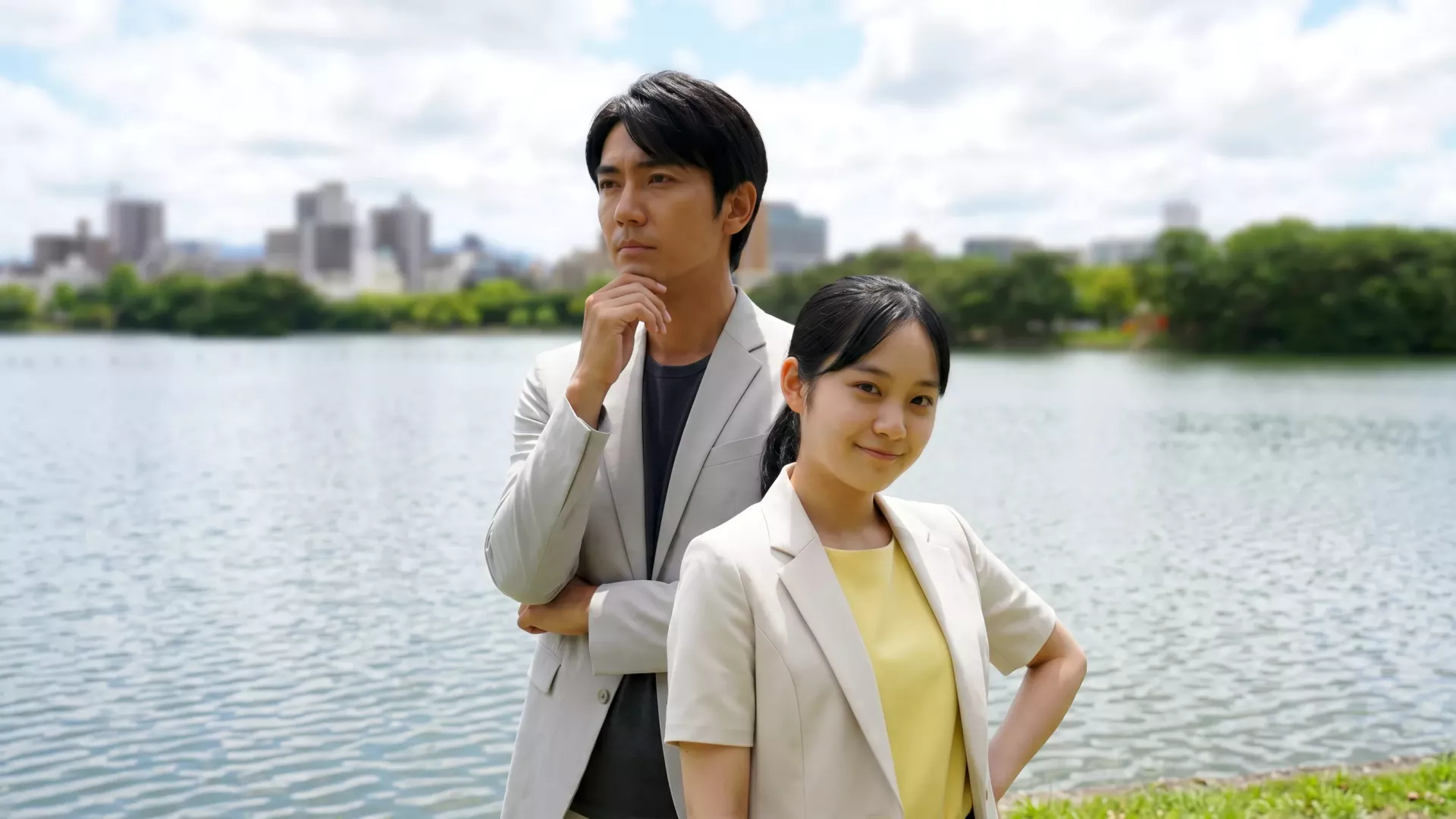
【Real Background × AI-Generated Characters】
Defining the 'Photoreal Novel'
A Photoreal Novel is a visual novel that utilizes highly realistic (photorealistic) assets to construct a world with the grit, tension, and immersion of a live-action film or drama.
While our approach in 'Kamiya Detective Agency' relies on seamlessly blending 'real-world photography' with 'AI generation technology,' we define it as a highly flexible new genre. In fact, it is entirely possible to create a Photoreal Novel using only AI-generated photorealistic materials, without any actual real-world photography.
While typical visual novels rely heavily on 2D anime-style illustrations, a Photoreal Novel pursues a realistic texture akin to live-action movies and TV dramas.
The Key Difference from Classic 'Live-Action Sound Novels'
When it comes to text-based adventures using live-action photography, historical masterpieces like Machi: Unmei no Kousaten or 428: Shibuya Scramble come to mind. Those were magnificent titles built on the sheer physical power of real actors and extensive location shooting.
In contrast, our newly proposed 'Photoreal Novel' has one absolute prerequisite: the use of AI technology. This makes it decisively different from the masterpieces of the past in the following ways.
1. A Seamless Blend of 'Absolute Reality' and 'Fictional Spaces'
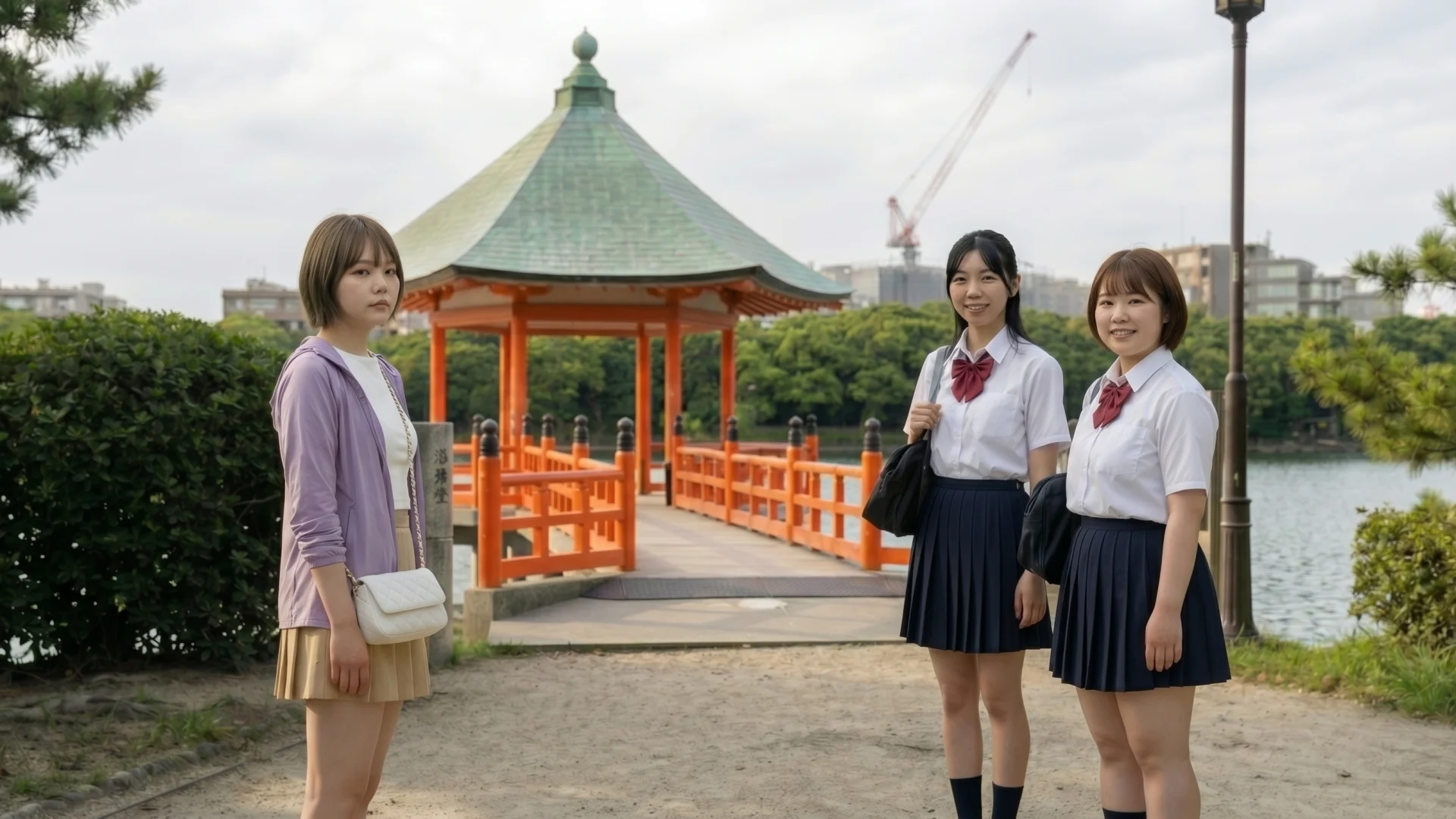
In 'Kamiya Detective Agency,' I walked the streets of Fukuoka (Nakasu, Ohori Park, Tenjin, etc.) myself to capture genuine real-world photographs that serve as the majority of our backgrounds. These are not built sets; the "real streetscapes of the Reiwa era" form the very foundation of the game's stage.
【Real Background × AI-Generated Characters】
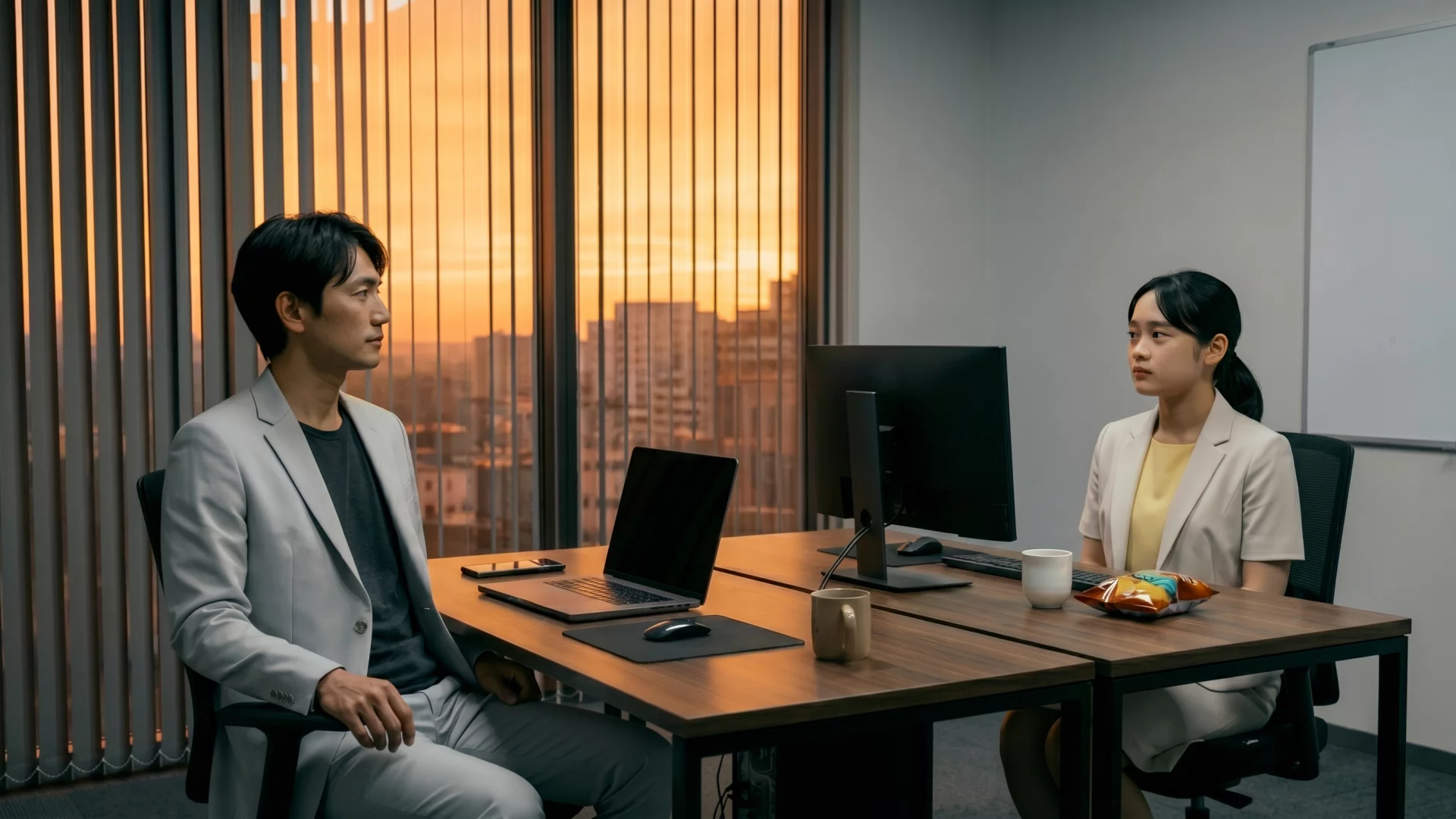
However, not every background is a real photo. For specific locations—such as the interior of the protagonist's base, the "Kamiya Detective Agency," a late-night "ramen stall," or a "school clubroom" and "hallway lockers"—we use fictional, photorealistic backgrounds completely generated by AI.
【Fully AI-Generated Photorealistic Image】
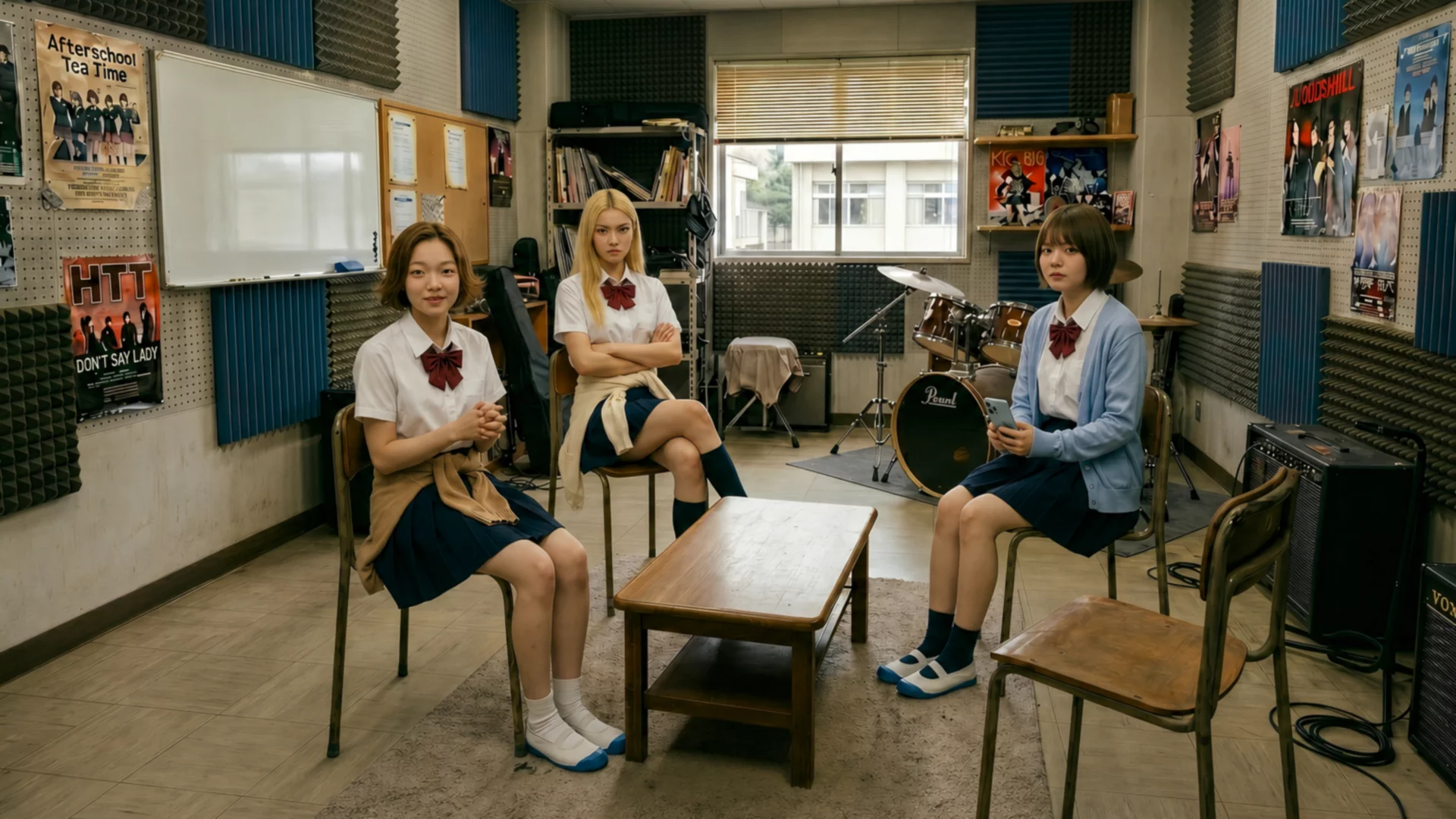
By naturally weaving in AI-generated backgrounds that are virtually indistinguishable from real photos, we can construct rich, intimate spaces even for locations where physical shooting is impossible—all without sacrificing a single shred of immersion.
2. Highly Photorealistic Character Expressions via AI
Using the latest AI image generation technology, we draw characters and evidence that sit naturally within these realistic backdrops without feeling out of place.
Of course, a fully live-action approach with real actors and models is incredibly attractive, and something I genuinely hope to achieve in the future. However, for a solo developer working in the indie scene, AI-assisted photorealism represents the best possible solution to deliver a rich, diverse visual experience on par with a TV drama—all within a realistic budget.
Additionally, as a development insider secret: in AI generation, maintaining character consistency is actually far easier with photorealism than with illustrations.
When working with illustrations, you have to worry not only about "character identity" (like facial features and body shape), but also about keeping the "drawing style" (brushwork, coloring, and line art style) consistent. That is incredibly difficult. With photorealism, however, real just has to look real—it naturally adheres to the shared standards of real-world physics, light, and lenses. This makes it far less prone to style drift and allows us to deliver a seamless, convincing, and highly realistic presentation throughout the entire game.
Why Choose a 'Novel Format' Over Video?
Today, AI video generation technology is evolving at breakneck speed. Yet, instead of a video-centric experience, we deliberately chose the "novel format" where players read static text at their own pace.
The reason is simple: to truly absorb the intricate plot and deduction of a mystery, reading text is a far superior format compared to watching a video roll by. ...I could give you more plausible-sounding reasons like that, but to be completely honest, the biggest reason is simply that for a solo developer, covering an entire long-form game with video was impossible in terms of man-hours, cost, and technology (laughs).
With current video generation AI, there are still too many hurdles regarding quality consistency and cost to create a full-motion game alone. Therefore, the static-image-based "novel format" emerged as the realistic, optimal solution to balance high-quality visuals and storytelling.
Why 'Photoreal Novel'?
I'd love to tell you it was all part of a grand design to "deliver unparalleled immersion"—but to be completely honest, I wasn't even aiming for live-action at the start (laughs).
Early in development, I was experimenting with semi-realistic illustrations and a hardboiled, gritty manga style akin to the Jake Hunter (Detective Saburo Jinguji) series.
Sure, in theory, you can train a LoRA (additional learning) or tune a custom model to lock in a specific character or art style.
However, as long as I was outputting illustrations via AI generation, that telltale "AI gloss"—that plasticky, distinct "AI art smell"—stubbornly remained. At least at the technology level when we began development in 2025, AI illustrations were of a quality that anyone could instantly spot as "AI art."
Furthermore, illustrations have an incredibly high failure rate regarding hands, faces, and general anatomy, requiring you to roll the "gacha" hundreds of times to get one ideal shot. On the other hand, photorealism is bound by the powerful physics of real lenses and lighting, meaning it breaks far less often. It simply had a much better "success rate"—a very pragmatic development reality.
So, just as an experiment, I tried generating characters with a "fully photorealistic" prompt. The moment I did, a realization hit me: "Wait... instead of struggling to make AI draw illustrations, isn't it infinitely easier and higher quality to just let it output realistic people!"
Ultimately, this live-action style—which began as an optimization for development cost and quality—ended up fitting the game's mystery setting and the real backdrops of Fukuoka perfectly. Thus, the "Photoreal Novel" was born.
...And above all, there is a very calculating marketing reason (laughs). On a Steam store page crowded with countless "2D anime-style visual novels," having a live-action thumbnail stands out like an absolute beacon.
To the World: #PhotorealNovel
"Games using live-action photography" are by no means new. However, while they historically required massive studio budgets and corporations, the fact that a single, solo developer (with zero prior IT experience!) can now build this realistic live-action mystery using AI is bound to have a major impact. It's a statement not just for Japanese game fans, but for players and creators worldwide.
Indie game expression breaking past limits by marrying a "personal idea" with "AI." That is the Photoreal Novel.
Also, the name "Photoreal Novel" is not something we intend to monopolize.
If there are other creators out there challenging new expressions with the combination of "live-action × AI", why don't we use this genre name together?
Of course, just because the visuals are realistic doesn't mean the gameplay systems or story will suddenly become magically amazing (laughs). However, we believe Kamiya Detective Agency will be a one-of-a-kind entertainment mystery that only a solo developer could create. Please look forward to the 2026 release of 'Kamiya Detective Agency: High School Girl Vanished in The Summer'!
【Fully AI-Generated Photorealistic Image】
【Bonus Backstory】
Speaking of casting real actors—as the ultimate, zero-cost shortcut, I actually used the method of casting myself as the developer.
To tell you the truth, the visual design of our protagonist, detective Kengo Kamiya, is based on my own face photos, given a slight 'handsome upgrade' via AI.
This is more than just a playful joke or a budget saver; it is a highly serious technical and artistic effort to bypass the generic, polished, "uncanny valley" faces common in AI generations. By doing this, we can capture the natural asymmetry of a real face and reconstruct a raw, authentic "Kyushu face" structure that blends seamlessly into the local Fukuoka setting—something that prompts alone could never achieve.
If you looked at the website or trailer and thought, "Wait... is this guy really that handsome?", your instincts are incredibly sharp! (laughs)
Yet, we experimented with this subtle imperfection and sense of reality, hoping it would serve as a vital anchor to ground detective Kengo Kamiya as a "convincing, flesh-and-blood human guide" amidst the AI-generated backdrops and visuals.
Perhaps this is the kind of new character expression that only a "solo developer with no IT experience × AI" could explore.